Quick disclaimer: if you wait for motivation, you'll never stay consistent toward your goals. The real key is discipline. But does that mean we can't give ourselves little tricks to feel more motivated? I don't think so. I like stacking the odds in my favor. So if you're struggling to move forward on your goals, here are some tricks to boost your motivation.
1. Have a Plan
It's hard to be motivated if you don't at least have a plan to execute. A plan of where you want to go gives you more clarity, and makes it easier to put in place the resources and actions needed to reach the results you want. It's pretty hard to feel motivated if you don't really know how to get somewhere: how can you even think about being motivated to do it?
A Notion template or a spreadsheet to structure this plan can make the whole thing much more concrete than keeping it fuzzy in your head.
2. Establish Routines
Routines let you choose the consistent actions you want to put in place, and automate them in a way, to reach real consistency, because consistency equals results. And within the consistency of small daily actions, it's easier to stay motivated.
Be patient with yourself in this process: a landmark study led by researcher Phillippa Lally of University College London, published in the European Journal of Social Psychology, found that it takes an average of 66 days for a new behavior to actually become automatic, with individual variation ranging from 18 to 254 days depending on the complexity of the habit. A routine that still requires conscious effort after a week, that's normal: you're right in the middle of the process, not failing at it.
3. Define Precise, Small Actions
It's much easier to stay in motion when you're already moving. Often, the hardest part is just getting started. So when you need to take action, find the smallest, most precise actions possible to do. If it takes about 2, 5, or 10 minutes to complete, perfect! Who can claim they don't have time for a task that only takes a few minutes in a day?
This isn't just intuition: researcher Teresa Amabile of Harvard Business School showed, in research published in the Harvard Business Review, that simply feeling like you're making progress, even in small steps, has the single biggest measured positive effect on motivation at work. By breaking things down this way, the perceived effort really goes down, and it takes far less motivation to get started. But once you're in motion, you're very likely to stay in motion and do more.
4. Visualize Your Goals, Ambitious but Realistic
It's essential to regularly remind yourself of your goals and visualize what they concretely look like. Don't forget that your goals need to be ambitious, but still realistic.
Here's an important nuance to know: psychologist Gabriele Oettingen, of New York University, showed through more than 25 years of research that positive visualization alone, without a concrete plan to face real obstacles, can actually hurt your motivation to act. The brain sometimes confuses the dream with the accomplishment. Her solution, "mental contrasting," involves combining positive visualization with an honest identification of possible obstacles, followed by a plan to work around them. You need to stay within a zone where, based on the time, energy, skills, and resources you have, it's actually achievable. Even if it comes with some challenges, which is a great thing.
5. Compete Against Yourself
Turn what you want to accomplish into a game of competition with yourself. Have fun beating your own records, setting yourself challenges, beating yesterday's version of you. Don't compete with others, only with yourself, because other people aren't in the same place as you: they're unique, with their own resources. Keep this competition with yourself healthy and enjoyable.
6. Give Yourself Rewards
Within this little game of self-competition, you can give yourself motivating rewards when you hit certain milestones. Knowing you'll be able to reward yourself in some way will motivate you to take action.
There's a precise psychological mechanism behind this. A classic study conducted by researchers Ran Kivetz, Oleg Urminsky, and Yuhuang Zheng, published in the Journal of Marketing Research and summarized by Columbia Business School, observed café customers enrolled in a loyalty program. Those who were getting closer to their reward (a free coffee) bought coffee significantly more often than those who were still far from it. This phenomenon, called the "goal-gradient effect," shows that your motivation naturally intensifies as you get closer to a reward. Structuring your goals into stages with milestone rewards, rather than one single big reward at the very end, can help you maintain your momentum longer.
7. Cultivate a Positive Mindset
At all times, it's really important to cultivate a good mindset and stay positive, even through small moments of sadness or disappointment. Don't beat yourself up. See failures as learning opportunities and chances to readjust.
These two reflexes are actually studied separately in psychology, and both lead to the same conclusion. On one hand, psychologist Carol Dweck of Stanford showed that a "growth mindset," believing your abilities can develop, leads to better outcomes when facing challenges. On the other, researcher Fuschia Sirois, of Durham University, found in a study published in Personality and Individual Differences that people who forgive themselves for their mistakes and delays genuinely move forward better afterward than those who beat themselves up over them. Beating yourself up doesn't help you move forward: it slows you down. Keep believing in yourself, stay grateful for the opportunity to learn what you want and reach your goals, even if it sometimes takes longer than expected. You can't lose if you don't give up.
8. Readjust When Something Isn't Working Well
Learning experiences are an opportunity to readjust. It's true! Having backup plans can help. When something isn't working, it's not the end: it's simply time to pivot, find other solutions, try new things, learn.
9. Add Some Fun
Whether it's listening to music, drinking your favorite beverage, eating your favorite snack, or using the rewards I mentioned above, whatever it is: add some fun into your process.
10. Surround Yourself Well
Your environment is truly powerful. And being supported and understood by someone can make a huge difference. Try to surround yourself with positive people who can understand your situation.
This isn't just common-sense advice: it's measurable. A study published in the British Medical Journal, conducted by researchers Nicholas Christakis and James Fowler using data from the Framingham Heart Study (over 4,700 people tracked over 20 years), found that when one person becomes happier, a friend living within a mile sees their own likelihood of becoming happy increase by 25%. The same researchers observed a similar effect for quitting smoking, in a study published in the New England Journal of Medicine. In other words, behaviors and mindsets genuinely spread through our social networks, almost like a contagion. Who you spend time with directly influences who you become, whether you want it to or not.
Frequently Asked Questions
Do I need to wait until I feel motivated to take action?
No. Discipline and routines are more reliable than motivation, which naturally comes and goes. The strategies here are specifically designed to reduce your dependence on momentary motivation.
Is visualizing my goals enough to achieve them?
No, and it's counterintuitive: research shows that positive visualization alone, without a concrete plan for obstacles, can even hurt your motivation to act.
Does who I surround myself with really affect my motivation?
Yes, measurably so. Research in social epidemiology has shown that states like happiness and behaviors like quitting smoking spread through social networks, almost like a contagion.
How long does it take for a new routine to become automatic?
An average of 66 days, with a fair amount of individual variation. Patience with yourself is part of the process.
Talk soon!
-
Sale!

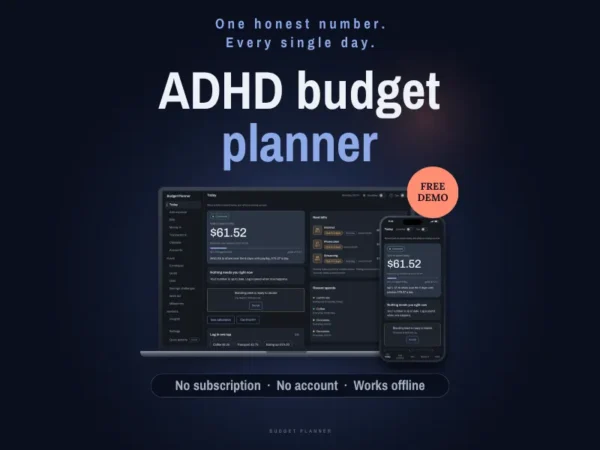
ADHD Budget Planner – App
Original price was: 30.00$.15.00$Current price is: 15.00$. -
Sale!
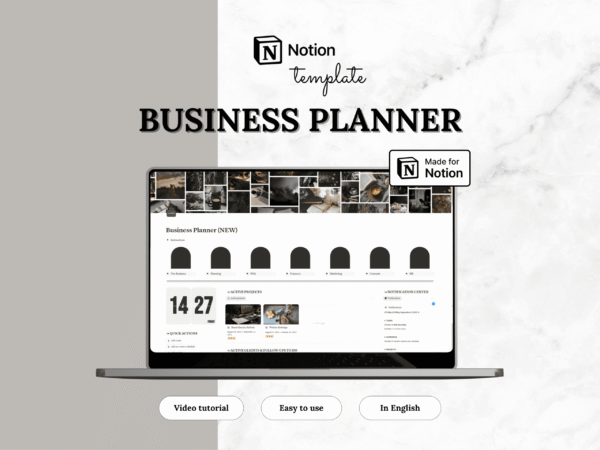
Notion template — Business planner
Original price was: 63.00$.31.50$Current price is: 31.50$. -
Sale!
Notion template — Career planner
Original price was: 16.00$.8.00$Current price is: 8.00$. -
Sale!
Notion template — Event planner
Original price was: 19.00$.9.50$Current price is: 9.50$. -
Sale!
Notion template — Fitness planner
Original price was: 19.00$.9.50$Current price is: 9.50$. -
Sale!
Notion template — GTD planner
Original price was: 20.00$.10.00$Current price is: 10.00$. -
Sale!
Notion template — Home management
Original price was: 19.00$.9.50$Current price is: 9.50$. -
Sale!
Notion template — Language learning
Original price was: 12.00$.6.00$Current price is: 6.00$. -
Sale!
Notion template — Life planner
Original price was: 47.00$.23.50$Current price is: 23.50$. -
Sale!
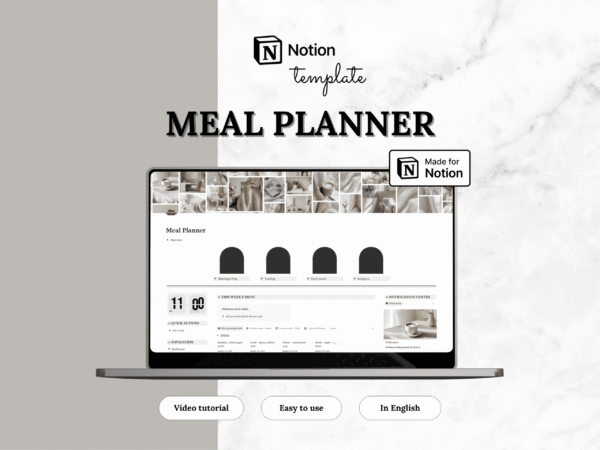
Notion template — Meal planner
Original price was: 12.00$.6.00$Current price is: 6.00$. -
Sale!
Notion template — Medical planner
Original price was: 10.00$.5.00$Current price is: 5.00$. -
Sale!
Notion template — Personal finance tracker
Original price was: 19.00$.9.50$Current price is: 9.50$.