We have access to so much information these days, so many digital tools, so much to do. With all of that, it's easy to get lost, to get scattered. It's easy to lose control.
How do you take back that control? How do you become more effective at managing your digital world? By applying 3 steps that are simple to understand, but not always so simple to apply if you don't genuinely commit to them.
The Benefits of Reorganizing Your Digital World
Digital organization comes with plenty of great benefits that are absolutely not negligible. It directly contributes to your wellbeing by taking stress and mental load off your plate day to day.
It's also obviously an excellent way to optimize your time. How much time do you lose when you're searching for something, or when you've completely lost the info?
On top of all that, it gives you better access to information, lets you provide better service to your clients, and lets you be, and feel, more in control. I won't go into the benefits in detail here, since you can find all of that in my article 5 Benefits of Digital Decluttering.
How Do You Take Back Control of Your Digital World?
Okay, I know you took the time to open this article to get the 3 steps. Here they are.
Step 1: Declutter
Before organizing anything, you need to clear things out. Make room. Get rid of what's no longer useful. Free up as much space as you can, delete everything you don't need anymore. It's simple, but it can take time.
This is where you need to ask yourself the right questions, and stop giving in to FOMO (fear of missing out), that fear of lacking something or missing out. What do you actually need?
This reflex of keeping everything "just in case" even has a name in psychology: digital hoarding. Research published in the journal All About Psychology, covering more than 2,200 Chinese university students, found that over 32% of them showed clear signs of digital hoarding behavior. And it's not just harmless: other research has established a link between this digital hoarding and higher levels of stress and anxiety. The main driver behind this behavior? Exactly the FOMO I mentioned: the often-irrational fear of one day needing that information you're about to delete, when in reality, you'll probably never touch it again.
Step 2: Organize
Okay, but what does "organizing" actually mean, really? You need to find a structure, a system that works for you. Your system needs to be intuitive for you and let you find everything easily whenever you need to.
Always keep this in mind: is your system logical? Do you have to solve a riddle, fight a monster, or win the Triwizard Cup to access what you need, or is it fast and simple? Think about that. Simplify.
An overly complicated system has a perverse effect: faced with too many options or too many steps to put something away, the brain tends to procrastinate the decision rather than make it, which brings back the very clutter you were trying to eliminate. The simpler your system, the more likely you are to actually use it day to day, rather than abandoning it after two weeks.
That's exactly why I created already-structured Notion templates and spreadsheets: to give you a system that's been thought through and tested, rather than asking you to invent one from scratch on top of everything else you already have to manage.
Step 3: Maintain
The system is great, but you need to maintain it long-term. You need to make regular updates as new things come up every day, every week. You need to make sure you're actually using the system you put so much heart into building. This is the step where you make sure the system is working well, and adjust it if it isn't. It's okay to try things and get it wrong, you just can't let that drag on indefinitely.
Be patient with yourself here: a landmark study led by researcher Phillippa Lally of University College London, published in the European Journal of Social Psychology, found that it takes an average of 66 days for a new behavior to actually become automatic, with individual variation ranging from 18 to 254 days depending on the complexity of the habit. In other words, if maintaining your digital organization system still takes conscious effort after a week or two, that's normal: you're probably still deep in the process, not failing at it. The encouraging part of that same study: missing a day here and there doesn't derail the whole process. Overall consistency matters more than perfection.
Frequently Asked Questions
Why is it so hard to delete unnecessary digital files?
It's a documented psychological reflex, often tied to the fear of lacking information later (FOMO). It's not a lack of discipline, it's a widespread human tendency.
How long does it take before a new organization system becomes automatic?
According to research, it takes an average of 66 days, with a fair amount of variation. Missing a day occasionally doesn't compromise the process.
Do I need to build my own digital organization system from scratch?
Not necessarily. An already-structured system, like a Notion template or a spreadsheet, can save you the longest and most discouraging step: building everything yourself.
Which step should I start with if I feel completely overwhelmed?
Always start with decluttering. Organizing a space still full of unnecessary things is building a system on a shaky foundation.
Talk soon!
-
Sale!

ADHD Budget Planner – App
Original price was: 30.00$.15.00$Current price is: 15.00$. -
Sale!
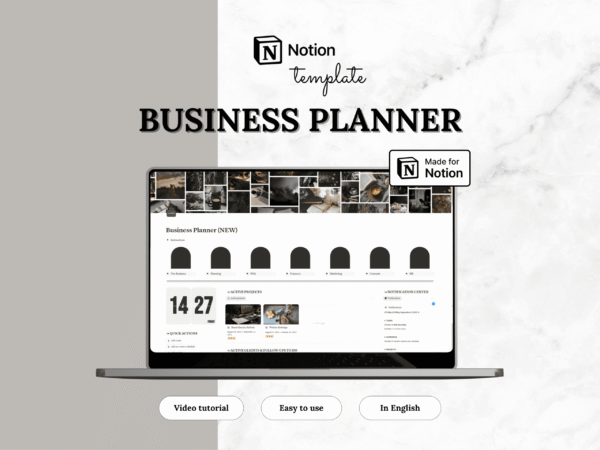
Notion template — Business planner
Original price was: 63.00$.31.50$Current price is: 31.50$. -
Sale!
Notion template — Career planner
Original price was: 16.00$.8.00$Current price is: 8.00$. -
Sale!
Notion template — Event planner
Original price was: 19.00$.9.50$Current price is: 9.50$. -
Sale!
Notion template — Fitness planner
Original price was: 19.00$.9.50$Current price is: 9.50$. -
Sale!
Notion template — GTD planner
Original price was: 20.00$.10.00$Current price is: 10.00$. -
Sale!
Notion template — Home management
Original price was: 19.00$.9.50$Current price is: 9.50$. -
Sale!
Notion template — Language learning
Original price was: 12.00$.6.00$Current price is: 6.00$. -
Sale!
Notion template — Life planner
Original price was: 47.00$.23.50$Current price is: 23.50$. -
Sale!
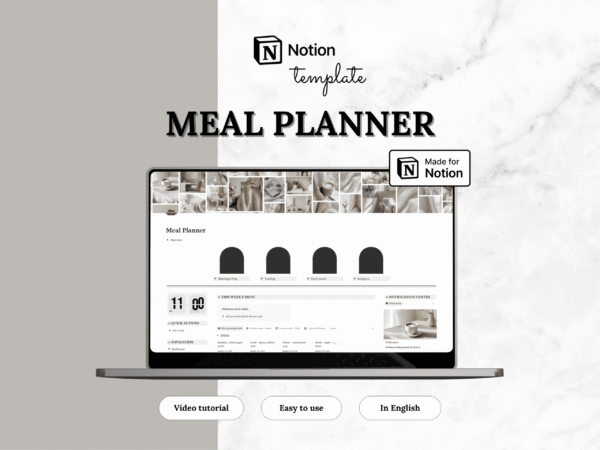
Notion template — Meal planner
Original price was: 12.00$.6.00$Current price is: 6.00$. -
Sale!
Notion template — Medical planner
Original price was: 10.00$.5.00$Current price is: 5.00$. -
Sale!
Notion template — Personal finance tracker
Original price was: 19.00$.9.50$Current price is: 9.50$.