Do you know what the benefits of being organized actually are? Are you one of those people who thinks being organized kills spontaneity, creativity, and freedom?
That's certainly tempting to believe, since it's a pretty widespread myth. But it's actually the opposite.
What Does "Being Organized" Actually Mean?
Before talking about the benefits, let's clarify what being organized actually means. Being organized means:
- taking the time to set goals based on your dreams and ambitions
- planning your quarters, months, weeks, and days
- creating to-do lists and all kinds of other lists so nothing gets forgotten
- maintaining a functional, tidy, uncluttered environment, and making sure everything has a place
- equipping yourself with work methods that are effective for you
- operating with predefined systems
- having routines and habits that fit your constraints
You don't have to do all of this to the letter to be an organized person and reap the benefits. But let's just say it helps a lot.
What Are the Benefits of Being Organized?
Being organized has several impacts on your life and your results.
Saving Time
By being organized, you eliminate physical and mental clutter. You waste far less time looking for things and making decisions. Planning also means less time spent, in the moment, wondering what you'll do and doing pointless things. Good organization lets you group tasks more efficiently to save time and make sure you're doing what matters.
There's a reason behind this: every small unplanned decision draws from a limited mental reserve. A study published in the Proceedings of the National Academy of Sciences, conducted by researchers Danziger, Levav, and Avnaim-Pesso, found that even experienced judges handed down different rulings depending on the fatigue accumulated since their last break, regardless of the actual facts of the case. In other words, the more unstructured decisions you pile up in a day, the more the quality of your choices tends to suffer. Building systems and routines is one way to reduce the number of small decisions you're making cold.
(A quick honesty note: some researchers have since debated the exact size of this effect among judges, but the underlying principle behind decision fatigue remains widely recognized in psychology.)
Not to mention that being organized reduces your stress, which in turn means less time lost worrying and overthinking.
Reducing Stress
It's not just a feeling: clutter has a measurable effect on your body. A study from the University of California, Los Angeles (UCLA), conducted by researchers Darby Saxbe and Rena Repetti as part of the Center on Everyday Lives of Families (CELF), found that people who described their home as cluttered or full of unfinished projects had less healthy cortisol (the stress hormone) patterns throughout the day than those who perceived their environment as restful. A cluttered space isn't just unattractive: your body literally experiences it as a source of chronic stress.
Separating Your Personal and Professional Spheres
It's easy to blend everything together when you're not organized, letting one sphere bleed into the other. Doing that seriously hurts your focus. Being organized also means setting aside dedicated time blocks for each area of your life, to keep things properly separated and focus as much as possible on one thing at a time.
Doing What You Love While Reaching Your Goals
Without organization, you can end up anywhere, and sometimes you don't even notice because you're still technically "in action." You assume that since you're working, you're making progress. But it's very easy to waste time on unimportant tasks that don't lead toward your goals. Good organization means making sure you're taking the right actions, and that you'll reach the results you truly want, faster.
Enjoying Your Free Time
Once you've planned and done the right tasks, your satisfaction goes way up, and you feel better when you're doing something else. You can truly rest, because you know you've taken meaningful action and made progress. That gives you the peace of mind to actually enjoy your downtime.
Acting With More Intention
Doing things just to do them doesn't get you anywhere. You always need to make sure the actions you take actually have a reason to exist, that they have an impact. Organization gives you that clear intention behind what you accomplish.
Being Less Busy, But More Productive
As I explained above, it's easy to constantly be "in action" without actually moving forward. You can be busy and exhausted without being productive. Getting organized means realigning so you stop being busy for busy's sake, and start genuinely doing the right things for real productivity.
Flourishing
Reaching the goals that truly matter to you is also a way to feel more fulfilled. Living out your dreams, accomplishing meaningful things, making a difference: who wouldn't want that?
Boosting Your Creativity
Eliminating distractions doesn't just boost your creativity, so does properly noting and structuring your creative ideas so you can put them into action. A clearer path also helps you clarify your ideas.
This is actually the opposite of the myth we started with. Several researchers in organizational psychology, including Baer and Oldham, have shown that creativity is fostered by constraints of time, resources, and process, rather than smothered by them. A well-defined framework doesn't block creativity: it gives it a direction to express itself in, instead of scattering in every direction at once.
The stress reduction that comes with organization also plays into your creativity, because it frees your mind from a lot of worries, making room for creativity.
That said, creativity varies from person to person, and it's possible that for some people, clutter is actually what makes them creative.
Being Organized Isn't the Same as Being Rigid
In practice, you don't need to plan every single minute of your life. Leave room for spontaneity too. It's important to leave gaps for the unexpected, for unplugging, for moving things around in your schedule as needed, and for enjoying things without overthinking it sometimes. Planning free time is part of the key.
Organization is freedom, it's flexible. You organize things your own way, based on your lifestyle and your constraints. Getting organized means taking back control of your time, your spaces, and your life. Nothing less.
Frequently Asked Questions
Does being organized really hurt creativity?
No, it's actually the opposite. Research in organizational psychology shows that structured constraints foster creativity rather than stifling it.
Why does clutter stress me out so much?
It's not just in your head: research has shown a measurable link between a perceived cluttered environment and less healthy stress patterns throughout the day.
Do I need to plan every minute to be organized?
No. The most sustainable kind of organization deliberately leaves room for the unexpected and for spontaneity.
Where should I start if I'm not naturally organized?
Start small: one system at a time, like a daily to-do list or a decluttered workspace, before adding other layers of organization.
Tools to Help You Get Organized
You don't have to start from scratch to put all of this in place. Whether you prefer a flexible, visual method or a clear, straightforward calculation-based system, ready-to-use tools exist to help you structure your goals, your finances, and your projects without having to invent everything yourself.
Notion templates are perfect if you want to centralize everything in one flexible space, your digital "second brain."
Spreadsheet templates for Google Sheets or Excel are perfect if you'd rather stick with a tool you already know, without having to learn a new platform or face a learning curve. You open the file, and everything is already structured and ready to use.
You'll find my Notion templates and spreadsheets in my shop, to help you put the principles of this article into concrete practice.
-
Sale!

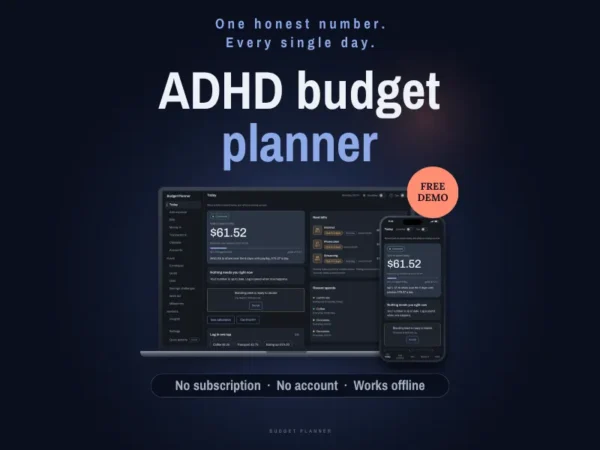
ADHD Budget Planner – App
Original price was: 30.00$.15.00$Current price is: 15.00$. -
Sale!
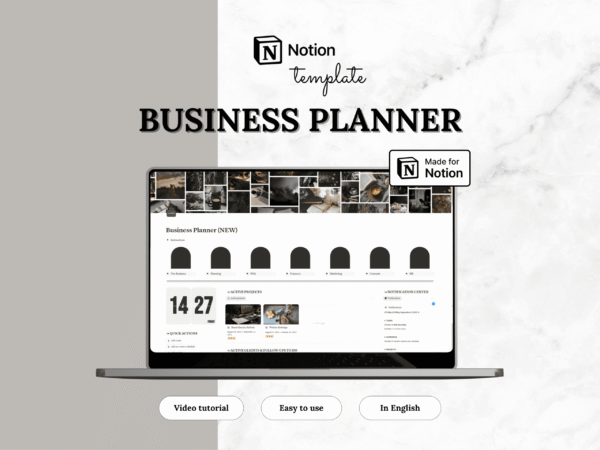
Notion template — Business planner
Original price was: 63.00$.31.50$Current price is: 31.50$. -
Sale!
Notion template — Career planner
Original price was: 16.00$.8.00$Current price is: 8.00$. -
Sale!
Notion template — Event planner
Original price was: 19.00$.9.50$Current price is: 9.50$. -
Sale!
Notion template — Fitness planner
Original price was: 19.00$.9.50$Current price is: 9.50$. -
Sale!
Notion template — GTD planner
Original price was: 20.00$.10.00$Current price is: 10.00$. -
Sale!
Notion template — Home management
Original price was: 19.00$.9.50$Current price is: 9.50$. -
Sale!
Notion template — Language learning
Original price was: 12.00$.6.00$Current price is: 6.00$. -
Sale!
Notion template — Life planner
Original price was: 47.00$.23.50$Current price is: 23.50$. -
Sale!
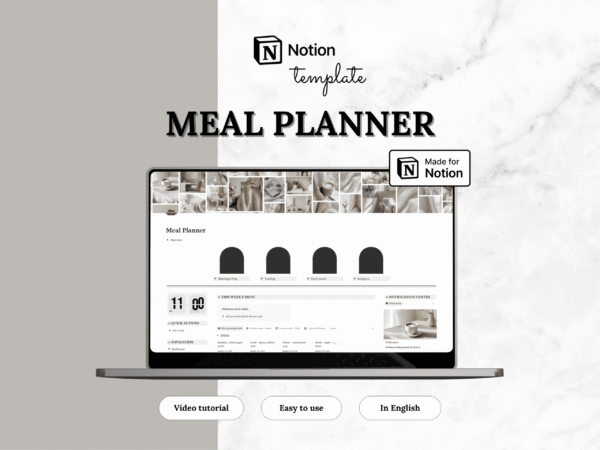
Notion template — Meal planner
Original price was: 12.00$.6.00$Current price is: 6.00$. -
Sale!
Notion template — Medical planner
Original price was: 10.00$.5.00$Current price is: 5.00$. -
Sale!
Notion template — Personal finance tracker
Original price was: 19.00$.9.50$Current price is: 9.50$.