What are the habits of effective people? What do they do every day?
The goal isn't to become exactly like these people. Our goals aren't all the same. Neither are our constraints or our lifestyles.
You don't need to be perfect at all of this to succeed and become more effective. It's also totally fine if you don't do some of these things.
But drawing inspiration, generating ideas, trying new things, that's always a good thing, and it's how we transform and move forward.
So I invite you to draw inspiration from these ideas and see if there aren't a few new habits you could bring into your life to make it better, across every area.
1. Move Daily and Eat Well
I'd bet you saw this one coming. To reach our goals, we need a healthy body, a functioning vehicle. Skipping meals, eating fast food constantly, never moving except between rooms in the house, none of that will let you keep going for long. You need energy, an outlet for stress, and nourishment for your body.
It's not just about general wellbeing: a study conducted by Goodwill Management for the French National Olympic and Sports Committee and Medef found that regularly practicing physical activity increases an employee's productivity by 6 to 9%. Moving isn't time stolen from your goals: it's what gives you the means to reach them.
2. Drink Plenty of Water, Especially First Thing in the Morning
Hydration is one of the things that gives you energy. In the morning, we're dehydrated, and that's sometimes why it's hard to get out of bed. As a guideline, you should drink roughly half your body weight in pounds, in ounces of water, per day.
Tip: find a large bottle, check how much water it holds, and count how many refills you need. Don't wait until you're thirsty to drink: most of us (me included) don't actually notice when we're thirsty or need water.
And it's not just about comfort. A study led by Professor Asher Rosinger and his team at Penn State University, published in the American Journal of Human Biology, followed 78 adults over three months and found that a higher level of dehydration was directly associated with worse performance on tasks requiring sustained focus: more time to complete the task, and more mistakes made. Your glass of water isn't a small detail: it's a focus tool.
3. Say No
Being effective doesn't mean doing everything. Highly effective people know when an opportunity isn't worth their time. They know their priorities and set aside what isn't one. Saying no to a request that doesn't serve you is really saying yes to what actually matters to you. It's not a selfish move: it's an act of prioritization.
4. Know Your Priorities
Okay, I already gave away the punchline in the previous point. Effective people know the different roles they need to play in their lives, what matters, and they don't neglect those priorities across every area of life. Knowing what matters to you isn't something you figure out once and forget: it's something you revisit regularly, because your priorities evolve over time.
5. Talk to People You Love Every Day
We all need to maintain a social side, even the most introverted among us (like me). For the sake of our mental health, we need to communicate with the people we love as often as possible. Maintaining good mental health has a positive impact on our daily effectiveness.
It's not just common-sense advice: it's one of the strongest conclusions in all of psychological research. The Harvard Study of Adult Development, the longest-running scientific study ever conducted on human happiness (over 85 years of tracking), now led by Dr. Robert Waldinger, has followed thousands of people across several generations. Its most striking conclusion: people who are most socially connected to their family, friends, and community are happier, physically healthier, and live longer than those who are less connected. Isolation, on the other hand, has long-term health effects comparable to smoking.
6. Accept Your Emotions and Talk to the Right People
Another important piece of our mental health: we shouldn't bottle up our emotions and wait for them to explode. We need to confide in the people close to us and/or consult professionals when needed, let ourselves cry or get angry when it happens, resolve conflicts as they come up, and so on. We can't be effective long-term if our negative emotions take over.
7. Laugh
In the same vein, make time to laugh. Have lighter, less serious moments, do activities that feel good. Surround yourself with people you can just have fun with. Watch shows or whatever else makes you laugh. It's not a waste of time: it's a necessary release valve that holds everything else together.
8. Take Breaks
We need to vary our schedule. We can't work 12-hour days nonstop. It's fine to have busier periods, but they shouldn't drag on too long. We need to take breaks every day, plus longer, complete breaks a few times a year. Real vacations, not fake ones where we're constantly interrupted by our obligations.
9. Sleep About 7 to 9 Hours a Night
That recovery time is essential. If you think you're short on time, sleep isn't where you should be cutting. There's plenty of wasted time you can eliminate long before touching your sleep hours. There are also plenty of ways to get more restorative sleep, fall asleep faster, and so on.
Sleep has a direct, quantifiable effect on productivity. According to a RAND Corporation study, sleep deprivation alone costs over $400 billion a year in lost productivity in the United States. Cutting into your sleep to "save time" often ends up costing you more than it seems to save.
10. Write
Write down your ideas, your desires, your dreams, your gratitude, your reviews and retrospectives, your thoughts, and so on. Empty your head and take the time to reflect. Give yourself the time to understand and improve. Give yourself the time to see all the good things in your life. Visualize the life you dream of. All of this makes us more effective.
Psychologist James Pennebaker, of the University of Texas at Austin, founded an entire field of research around what's called expressive writing. According to the American Psychological Association, his work, replicated many times since, has shown that simply writing regularly about your thoughts and emotions can improve both mental and physical health, as well as work performance. Clearing your head on paper isn't just therapeutic: it's measurable.
11. Meditate
Take the time to fully stop, focus on your breathing, empty your head. There are plenty of types of meditation that can help. You have to find what works for you. It can be as simple as taking 5 minutes to breathe slowly and do nothing. Managing your stress makes a big difference. I'm sending this reminder to the little stressed-out version of myself too.
A meta-analysis published in JAMA Internal Medicine, one of the most rigorous medical journals in the world, led by researcher Madhav Goyal and his team, analyzed the full body of clinical trials on meditation programs. Their conclusion: meditation produces a small to moderate, but real, reduction in stress, anxiety, and depression. It's not a miracle cure, but the effect is genuinely real and scientifically documented.
12. Learn
Whether it's through reading, watching videos, or taking courses, effective people never stop learning. Everything changes, everything evolves quickly. We need to renew ourselves, adapt. We also tend to get bored fairly fast. By constantly learning, our lives become more varied and more motivating.
There you go! Being effective means maintaining every area of your life, not just one at the expense of the others. It's important to build habits, to create routines that take all of this into account and that fit well with your constraints and the lifestyle you have and want. It's up to each of us to do what works.
Frequently Asked Questions
Do I need to adopt all 12 habits at once to see a difference?
No. Pick the one or two that resonate with you the most, ease into them, then gradually add the others. Lasting change is built one habit at a time.
Does drinking water really affect my focus?
Yes. Research has shown that a higher level of dehydration is associated with a measurable drop in performance on tasks requiring sustained attention.
Why are social relationships considered so important for effectiveness?
Because the longest-running scientific study ever conducted on human happiness found that people who are well socially connected are happier, healthier, and live longer than isolated people.
Does meditation actually work, or is it just a trend?
A meta-analysis published in a rigorous medical journal confirmed a real, though moderate, effect on reducing stress and anxiety.
Talk soon!
-
Sale!

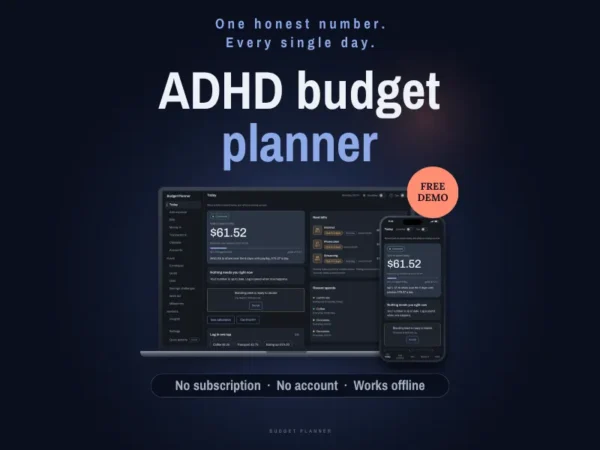
ADHD Budget Planner – App
Original price was: 30.00$.15.00$Current price is: 15.00$. -
Sale!
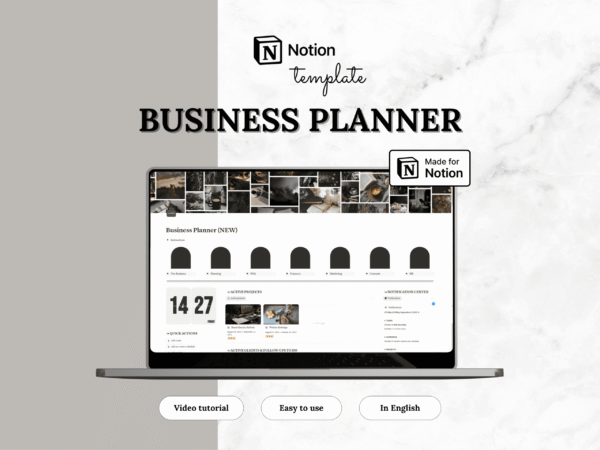
Notion template — Business planner
Original price was: 63.00$.31.50$Current price is: 31.50$. -
Sale!
Notion template — Career planner
Original price was: 16.00$.8.00$Current price is: 8.00$. -
Sale!
Notion template — Event planner
Original price was: 19.00$.9.50$Current price is: 9.50$. -
Sale!
Notion template — Fitness planner
Original price was: 19.00$.9.50$Current price is: 9.50$. -
Sale!
Notion template — GTD planner
Original price was: 20.00$.10.00$Current price is: 10.00$. -
Sale!
Notion template — Home management
Original price was: 19.00$.9.50$Current price is: 9.50$. -
Sale!
Notion template — Language learning
Original price was: 12.00$.6.00$Current price is: 6.00$. -
Sale!
Notion template — Life planner
Original price was: 47.00$.23.50$Current price is: 23.50$. -
Sale!
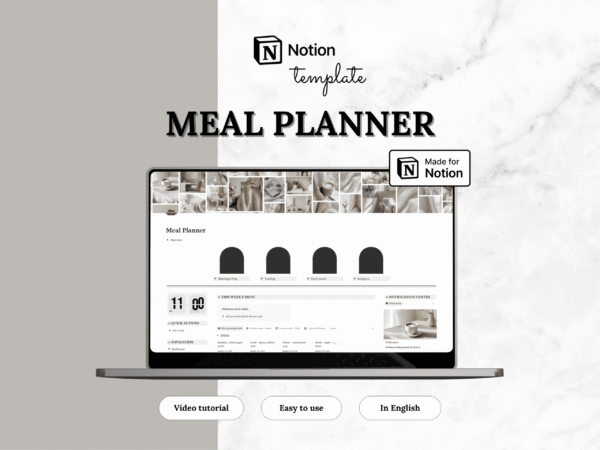
Notion template — Meal planner
Original price was: 12.00$.6.00$Current price is: 6.00$. -
Sale!
Notion template — Medical planner
Original price was: 10.00$.5.00$Current price is: 5.00$. -
Sale!
Notion template — Personal finance tracker
Original price was: 19.00$.9.50$Current price is: 9.50$.