How can you define your priorities when you have a mountain of tasks to do, you're short on time, and everything feels important, even urgent?
It's hard to find clarity when everything is tangled up in your head. When you're already short on time to get your tasks done, it can feel impossible to even consider stopping to clearly define your priorities so you can plan and work better. And yet, it's essential.
Why Set Priorities?
Setting priorities is essential to working smarter and working less. Without priorities, you end up doing a bit of everything, constantly working without necessarily reaching your goals. Prioritizing means figuring out what has the most impact, what actually matters most.
There's a well-documented psychological reason why this is so hard to do naturally. A study published in the Journal of Consumer Research, conducted by researchers Meng Zhu, Yang Yang, and Christopher Hsee, identified what they call the "mere urgency effect." Their five experiments showed that people tend to choose urgent but unimportant tasks over genuinely important ones, even when they're explicitly told the important task pays off more. In other words, your brain is literally wired to chase urgency over importance, regardless of your willpower or discipline. It's not a character flaw: it's a universal human bias. And that's exactly why a clear priority system is necessary: to counteract a natural tendency, not just to "be more organized."
Defining your priorities is an essential step in strategic planning, whether for a business or for your own life.
How Do You Define Your Priorities?
Now that we've established that defining your priorities matters and that you can't skip it, here are some steps to do it well.
1. Take Inventory of All Your Tasks
The first step to defining your priorities is to take a complete inventory of every task you have to do.
In fact, at all times, you should have a single place where you always write down everything you need to do. Everything needs to be recorded, even the smallest tasks. This gives you a full overview of your workload, and that's genuinely important.
Completely empty your head and write everything down. If you don't have a central system for this yet, a structured Notion template for task management or a simple spreadsheet can serve as a ready-made starting point, rather than improvising a new system every time.
2. Find Your Mission and Long-Term Vision
To go further in defining your priorities, you need to clearly identify your mission and your long-term vision.
Where do you want to go? Who do you want to serve, and how do you want to do it? What do you want to accomplish, and what are your dreams?
Your destination needs to be clear if you want to be able to identify the priority actions to get there. So take the time to ask yourself the right questions and keep that destination in mind at all times.
3. Define Your Specific Goals
Once your longer-term vision is clear to you, even though it may evolve over time, you can now set several specific goals that will help you get closer to your mission and vision.
What pillars can you reach that align well with your chosen destination? How can you steadily move toward it?
I'd suggest setting goals that are specific and precise, defined in time, a little challenging but still realistic, relevant to your life context, and measurable as much as possible with numbers and indicators.
You can check out Michael Hyatt's SMARTER method here to help you set better goals.
4. Break Your Goals Down Into Concrete Actions
Now that you've set specific goals, you need to break them down into concrete actions. What actions do you need to take to reach your goals, and in what order?
You need to map out the clearest possible path. It's fine if you don't know every step in advance: some things can absolutely be adjusted along the way once you're in motion.
5. Define the Value Added by Each Task
Your path is mapped out, and you have a good sense of which actions you need to take to reach your goals.
Now, stop and ask yourself which of these actions will TRULY move you forward. Which ones will bring the greatest added value, the biggest impact?
Are there any that, in the end, aren't necessary and won't bring much? Can you eliminate them? This is exactly where the mere urgency effect we mentioned earlier comes back to trip you up: an urgent but unimportant task will feel more pressing than a genuinely strategic one. Taking a moment to consciously evaluate the real value of each task is your way of working around that bias.
6. Rank Your Tasks
In light of these questions, you now need to rank your tasks based on their added value, their impact on reaching your goals. Order them as well as you can.
A spreadsheet with a simple scoring system (for example, an impact score of 1 to 5 for each task) can make this exercise much more visual and less abstract than a mental list.
7. Fit Your Tasks Into Your Schedule Based on Effort Required and Your Most Productive Times
Try to figure out when your most productive times of the day are. For many people, that's the morning, when they're well-rested and haven't spent much energy yet. It's different for everyone though.
Tasks with high added value will sometimes require more effort and focus. So schedule them as a priority during the times when you're most productive and focused. Nothing else should come before those tasks during those windows, as much as possible.
Start there, and keep a list of more secondary tasks to handle once your priorities are done.
Frequently Asked Questions
Why do I always feel like everything is urgent at the same time?
It's a documented psychological bias: the human brain has a natural tendency to favor urgency over actual importance, even when we objectively know another task matters more.
Where should I start if I feel completely overwhelmed?
Start by clearing your head: take a complete inventory of all your tasks in one place, before you even think about prioritizing them.
Should my priorities stay the same over time?
No. Your long-term vision can evolve, and your priorities need to be reviewed regularly to stay aligned with it.
How do I know if a task truly has value or if it just feels urgent?
Ask yourself about its real impact on your goals, not just its deadline. A task with a tight deadline isn't automatically more important than one without an immediate due date.
Talk soon!
-
Sale!

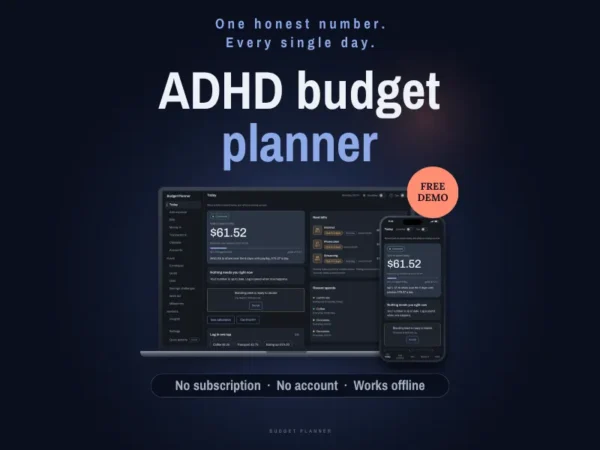
ADHD Budget Planner – App
Original price was: 30.00$.15.00$Current price is: 15.00$. -
Sale!
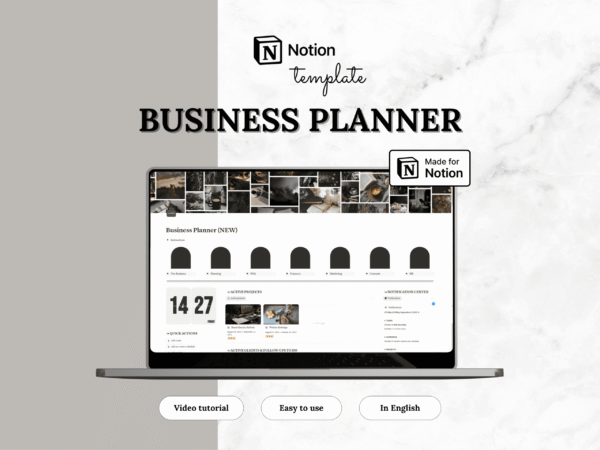
Notion template — Business planner
Original price was: 63.00$.31.50$Current price is: 31.50$. -
Sale!
Notion template — Career planner
Original price was: 16.00$.8.00$Current price is: 8.00$. -
Sale!
Notion template — Event planner
Original price was: 19.00$.9.50$Current price is: 9.50$. -
Sale!
Notion template — Fitness planner
Original price was: 19.00$.9.50$Current price is: 9.50$. -
Sale!
Notion template — GTD planner
Original price was: 20.00$.10.00$Current price is: 10.00$. -
Sale!
Notion template — Home management
Original price was: 19.00$.9.50$Current price is: 9.50$. -
Sale!
Notion template — Language learning
Original price was: 12.00$.6.00$Current price is: 6.00$. -
Sale!
Notion template — Life planner
Original price was: 47.00$.23.50$Current price is: 23.50$. -
Sale!
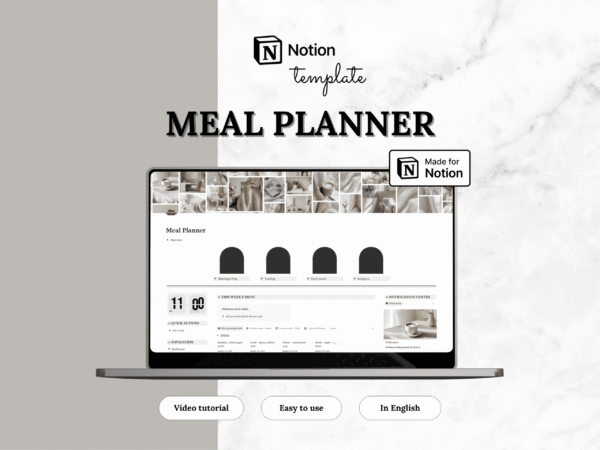
Notion template — Meal planner
Original price was: 12.00$.6.00$Current price is: 6.00$. -
Sale!
Notion template — Medical planner
Original price was: 10.00$.5.00$Current price is: 5.00$. -
Sale!
Notion template — Personal finance tracker
Original price was: 19.00$.9.50$Current price is: 9.50$.