We're all racing against time. We wish it would stop. We wish we had more of it. But really, all we can do is learn to manage it well.
Time management is tied to more factors than we tend to think. Rather than exploring how to gain time, let's look at which obstacles we can actually have an impact on. What are the obstacles to good time management?
The Obstacles Within You
Managing your time well doesn't just start with what's around you, but also with what's inside you: your fears, your mindset, and so on. Here are a few examples.
Perfectionism
Ahhhh, perfectionism. We just really want everything to always be perfect 😂 And yet, everyone is imperfect, and honestly, small mistakes don't matter that much.
There's a fact about this that often comes as a surprise: a large-scale meta-analysis published in the American Psychological Association's Psychological Bulletin, led by researcher Piers Steel and covering 691 studies, found that perfectionism isn't actually one of the factors most strongly linked to procrastination and poor time management. What actually predicts delay is more about how unpleasant a task feels and how confident we are in completing it. Perfectionism can feed into both of those factors, but it isn't the main cause. In other words, "better done than perfect" isn't just a nice mantra: it's backed by research. You just have to take action, because otherwise, I guarantee you'll lose time: overthinking, endlessly polishing, exhausting yourself without results.
Lack of Confidence
Along the same lines as perfectionism, if you don't have enough confidence in yourself, you'll overthink, over-polish, fuss over details, and so on.
Psychologist Albert Bandura, whose theory of self-efficacy remains one of the most influential in modern psychology, showed that confidence in your own ability to complete a specific task is one of the best predictors of actual performance. And the good news, confirmed in a follow-up study conducted with researcher Dale Schunk, is that this confidence isn't tied to a fixed personality trait: it's literally built through the accumulation of small, concrete successes. Every small task you complete strengthens your belief in your own ability a little more, which makes the next one easier to take on. (That's actually the same principle behind momentum, if that topic interests you, I go into more detail on it here.)
What I'd tell you: play to your strengths and optimize them as much as possible, and work on your weaknesses little by little, without putting too much pressure on yourself.
Difficulty Making Decisions
You make a ton of decisions in a day without even realizing it. What to wear? What to eat? What to say? What to do? If you start spending a lot of time and energy on every single decision, you'll end up hitting what's called decision fatigue.
This phenomenon has been observed in surprising contexts. A study published in the Proceedings of the National Academy of Sciences, conducted by researchers Danziger, Levav, and Avnaim-Pesso, found that even experienced judges handed down different rulings depending on the fatigue accumulated since their last break, regardless of the actual facts of the case. If decision fatigue can influence such seasoned professionals, imagine the cumulative effect of dozens of small, insignificant decisions in your own day. You'll end up feeling exhausted, and struggling even more to make decisions, which slows down your results even further. Sometimes, you shouldn't overthink it and should just decide, especially for the smaller, less important decisions.
Difficulty Delegating
When it comes to delegation, sometimes it's a financial issue. But what I want to address here is the mental block around delegating. Even when finances allow for it, a lot of people are reluctant to delegate because they believe no one else can do it as well as they can. Or they delegate, don't trust the outcome, and end up redoing everything themselves afterward. It's important to learn how to delegate effectively when the timing is right, both personally and professionally.
The Obstacles Tied to Your Health
I can't talk about obstacles to good time management without talking about health. Health equals productivity, and therefore good time management, because your body is your main tool throughout the day. It's what lets you navigate your time.
Lack of Sleep
If you struggle with insomnia, other sleep issues, or you don't give yourself enough time to sleep, you certainly won't be able to optimize your time during the day. Your cognitive abilities and your speed of execution suffer directly.
Sleep has a quantifiable effect on productivity: according to a RAND Corporation study, sleep deprivation alone costs over $400 billion a year in lost productivity in the United States.
Poor Nutrition
Time management means energy management. How can you have a good energy level if your diet isn't giving your body what it needs?
Lack of Physical Exercise
Sitting at a desk all day without moving is quite the challenge. Physical activity helps with better focus, on top of strengthening your body to help you get through your days.
It's not just a feeling: a Goodwill Management study found that regularly practicing physical activity increases an employee's productivity by 6 to 9%.
Lack of Rest
I mentioned physical activity in the previous point, but rest is just as important. Your body and mind need it. Take breaks in your day, and take days and weeks off. It's productive, and it contributes to good time management, because it lets you get better results when you're not exhausted. You have to recharge the batteries, as they say.
The Obstacles Tied to Planning
Lack of Prioritization
Time management is a matter of choosing between several activities, tasks, and projects. If you don't know your priorities, you'll likely end up doing a bit of everything and filling your time with a bunch of pointless things. Result: time spent, but not the results you wanted.
On that note, I'd suggest reading my article How to Define Your Priorities?
Not Having Defined Goals
Time management really means being able to take the actions that have the biggest impact on your goals. So how can you do that if you don't have clearly defined goals? I invite you to read my articles Why Set Goals? and How to Build Momentum to Achieve Big Goals?
Saying Yes to Everything
Poor planning can make you lose sight of how much time you actually have left to take on other opportunities. That's how, sometimes, you end up saying yes to everything, and you find yourself carrying so much that it stops making any sense. So you need to plan well and keep your priorities and goals in mind, to know what to say yes to, and above all, to be able to say no.
Multitasking
Sometimes, when we don't plan well what we need to do, we end up doing a bunch of things at once. We go in every direction and don't finish anything.
A landmark study published by the American Psychological Association, conducted by researchers Rubinstein, Meyer, and Evans, measured what actually happens in the brain when switching between two tasks: every switch causes a measurable loss of time, which increases with task complexity. Multitasking is genuinely the best way to split your focus and get worse results. Ideally, you should do one thing at a time, but at 100%.
The Obstacles Tied to Your Environment
Distractions
When I talk about distractions, I mean technology (social media, calls, emails, etc.), people interrupting you or making noise, your own thoughts, and any other disruptive noise.
According to researcher Gloria Mark of the University of California, Irvine, it takes an average of 23 minutes and 15 seconds after an interruption to return to the same level of focus you had before, a figure she shared in interviews about her research, including with the Wall Street Journal. I don't think we can ever manage distractions 100% perfectly. But we need to learn to reduce their impact as much as possible to reach more optimal time management.
Where Should You Start?
Looking at all of this at once can feel like a lot. My advice would be to start with just one obstacle that affects you the most, and work on gradually reducing its impact on your time management. Taking it one small step at a time makes it easier. Then, once that becomes easier, you can move on to a second obstacle.
To help you structure this work, a Notion template or a spreadsheet to track your priorities and goals can give you a concrete starting point, rather than trying to manage it all in your head.
Frequently Asked Questions
Is perfectionism really the main obstacle to good time management?
Not according to research. What matters more is how unpleasant a task feels and how confident we are in completing it, with perfectionism being just one factor among others.
How can I build more confidence in my abilities?
Through the accumulation of small, concrete successes. Confidence isn't a fixed trait: it's built gradually, one action at a time.
Why am I so exhausted from making decisions by the end of the day?
It's a real phenomenon called decision fatigue, documented even among experienced professionals like judges. Simplifying small everyday decisions helps preserve that energy for the choices that truly matter.
Which obstacle should I start with if several affect me at once?
Choose the one that affects you the most in your current daily life, and work on it gradually before adding a second one.
Talk soon!
-
Sale!

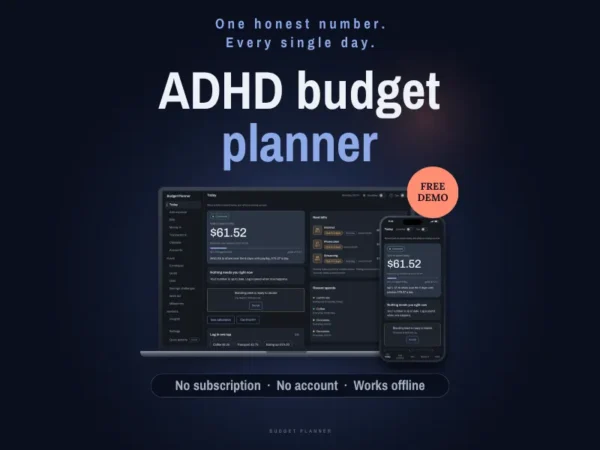
ADHD Budget Planner – App
Original price was: 30.00$.15.00$Current price is: 15.00$. -
Sale!
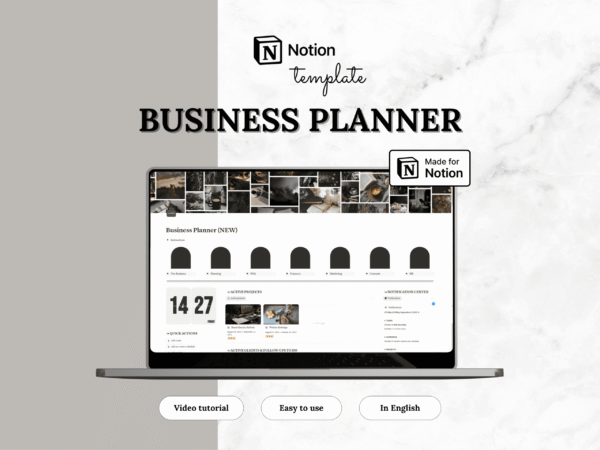
Notion template — Business planner
Original price was: 63.00$.31.50$Current price is: 31.50$. -
Sale!
Notion template — Career planner
Original price was: 16.00$.8.00$Current price is: 8.00$. -
Sale!
Notion template — Event planner
Original price was: 19.00$.9.50$Current price is: 9.50$. -
Sale!
Notion template — Fitness planner
Original price was: 19.00$.9.50$Current price is: 9.50$. -
Sale!
Notion template — GTD planner
Original price was: 20.00$.10.00$Current price is: 10.00$. -
Sale!
Notion template — Home management
Original price was: 19.00$.9.50$Current price is: 9.50$. -
Sale!
Notion template — Language learning
Original price was: 12.00$.6.00$Current price is: 6.00$. -
Sale!
Notion template — Life planner
Original price was: 47.00$.23.50$Current price is: 23.50$. -
Sale!
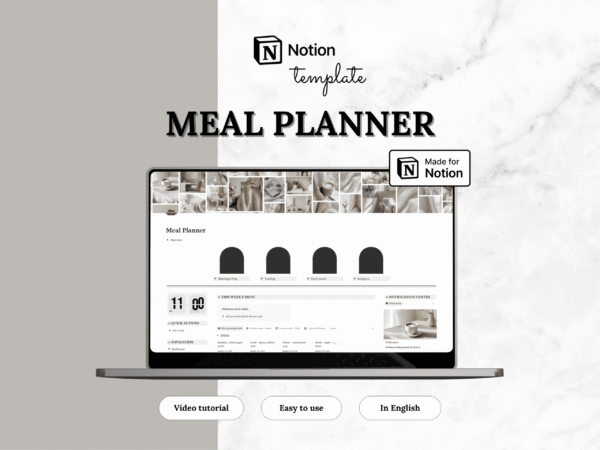
Notion template — Meal planner
Original price was: 12.00$.6.00$Current price is: 6.00$. -
Sale!
Notion template — Medical planner
Original price was: 10.00$.5.00$Current price is: 5.00$. -
Sale!
Notion template — Personal finance tracker
Original price was: 19.00$.9.50$Current price is: 9.50$.