Taking action... easier said than done, right? And yet, it doesn't have to be complicated.
We're all a bit of a procrastinator from time to time, but if it happens too often and drags on too long, it can genuinely become harmful, and you can end up with regrets. I don't know about you, but personally, I absolutely do not want to wake up in a few years carrying a sense of regret inside me.
What's Stopping You From Taking Action
Not Knowing Where to Start
Often, we don't take action because we have a vague desire in mind, but all the steps aren't clear, and we genuinely don't know where to start. So we see the whole thing as one giant mountain, with no defined first step.
Not Knowing Where You're Headed
On top of not knowing where to start, sometimes the destination and the reasons behind the goal are fuzzy. If you don't know the destination (even if it can change along the way), it's hard to know which actions matter. You need to know where you're headed to know which path to take.
If this point speaks to you, my articles How to Define Your Priorities? and Why Set Goals? can help you clarify that destination. A Notion template or a spreadsheet to structure your vision can also make this step much more concrete than leaving it fuzzy in your head.
Waiting for Perfection
Nothing is ever perfect. Waiting for perfection is like waiting for Santa to come down your chimney. It's not going to happen, and you'll just stay stuck.
Here's a fact that often comes as a surprise: a meta-analysis published in the American Psychological Association's Psychological Bulletin, led by researcher Piers Steel across 691 studies, found that perfectionism isn't actually one of the factors most strongly linked to procrastination. What really predicts a delay in taking action is more about how unpleasant a task feels, and how confident we are in completing it. Perfectionism can feed into both of those factors, but it isn't the main cause. If you have perfectionist tendencies (like me), know that perfectionism is a recognized barrier to taking action, but it's not a life sentence: it's more important to move forward toward your goals than to be perfect.
Your Fears and Other People's Fears
Did you know your brain is constantly trying to protect you from discomfort? And yet, that's not always really in your best interest. Those fears, like fear of failure, fear of being judged, or even fear of succeeding and not being able to handle that success, keep you from going further. They keep you in place.
The same goes for all the fears the people around you project onto you to protect you and keep you from making mistakes. The intention is good, because the people who love you want to see you safe, but the consequences are more negative.
You Think You're Short on Time
How many times have you had ideas, projects, goals calling out to you, but told yourself you didn't have the time? The truth is, it's always a question of priorities, because we all have the same amount of time in a day.
There's a psychological explanation for this constant sense of urgency that makes us say "I don't have time." A study published in the Journal of Consumer Research, conducted by researchers Zhu, Yang, and Hsee, found that people naturally tend to choose urgent but unimportant tasks over genuinely important ones, even when they're explicitly told the important task pays off more objectively. Your brain often confuses urgency with importance. Instead of saying you don't have time, ask yourself whether what you want to do is important enough to you, compared to the less important things you're currently wasting time on.
You Lack Confidence in Yourself
It's possible you're not taking action because you believe you're not capable. It's possible you have certain skills to develop to reach a specific goal. But you know what? Everything can be learned.
Psychologist Albert Bandura, whose theory of self-efficacy remains one of the most influential in modern psychology, showed that confidence in your own ability to complete a task isn't a fixed trait: it's literally built through the accumulation of small, concrete successes. Behaviors can change. Skills can be acquired, and that's now easier than ever with the access to information we have today. Habits can be changed. You always need to remind yourself that nothing is fixed, and everything can improve.
How to Successfully Take Action
Project Yourself Into the Future
Think about the future. What have you accomplished? Where do you see yourself? Define, as clearly as possible, the destination you want to reach, so you can then determine the precise actions to take.
Eat Your Frog First Thing in the Morning
Is there an action you keep pushing off? Do it first thing in your day, before starting anything else. Above all, don't check social media or your emails first: just do that action.
There's a good reason to do this early: your capacity for self-control naturally declines over the course of the day. A study published in Psychological Science, conducted by researchers Kouchaki and Smith, found that our self-discipline is a resource that depletes from the small decisions and resisted temptations accumulated since the morning. (If the "easiest or hardest task first" debate interests you, I go into more detail on it here.)
Reframe Your Thoughts and Stop Overthinking
First, you need to know that your fears, and other people's fears, aren't there because you're in real mortal danger, but rather because we don't like being uncomfortable, and it's more pleasant to slip into our slippers.
This strategy even has a name in psychology: psychologist James Gross, of Stanford University, spent decades developing and testing what's called "cognitive reappraisal." His research, published notably in Current Directions in Psychological Science, shows that consciously changing how we interpret a stressful situation, rather than simply trying to suppress the discomfort it generates, is a significantly more effective emotional regulation strategy long-term. In other words, it's not just "thinking positive": actively reframing your fear ("this fear is protecting me from discomfort, not from real danger") has a measured effect on your ability to move past it.
You also need to know that nothing is impossible, but you simply have to go one step at a time, and the path will look different for everyone. You have to be patient, but you can't lose if you don't give up.
Sometimes, you just have to stop overthinking and jump in. Don't let your brain convince you that you're better off where you currently are if, deep down, something else is calling you.
Start With the Smallest Step
Don't look at the whole mountain. Focus instead on each small step, one at a time, that you need to take. When an action only takes a few minutes, who can't find time for that?
This principle is well documented: researcher Teresa Amabile of Harvard Business School showed, in research published in the Harvard Business Review, that simply feeling like you're making progress, even in small steps, has the single biggest measured positive effect on motivation. What matters is progressing consistently, not doing everything in a single day.
Frequently Asked Questions
Is perfectionism really what's holding me back the most from taking action?
Not necessarily. Research shows that what matters more is how unpleasant a task feels and how confident we are in completing it, with perfectionism being just one factor among others.
Why do I always feel like I'm short on time?
It's often a question of priorities rather than actual time available. The brain naturally tends to confuse urgency with importance.
Can reframing my thoughts really help me take action?
Yes. Decades of research in emotional regulation show that consciously changing how you interpret a stressful situation is more effective than trying to suppress the discomfort it generates.
Which strategy should I start with if several obstacles are affecting me at once?
Start with the smallest possible action on the obstacle that's currently affecting you the most, rather than trying to fix everything at the same time.
Talk soon!
-
Sale!

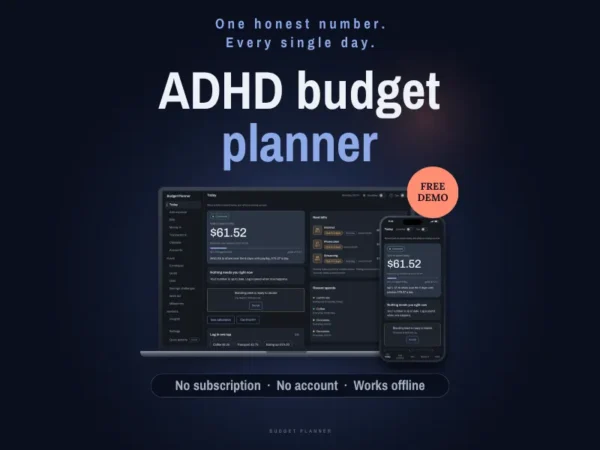
ADHD Budget Planner – App
Original price was: 30.00$.15.00$Current price is: 15.00$. -
Sale!
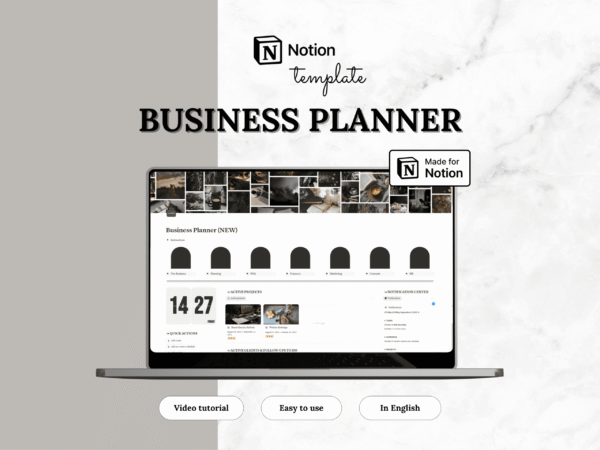
Notion template — Business planner
Original price was: 63.00$.31.50$Current price is: 31.50$. -
Sale!
Notion template — Career planner
Original price was: 16.00$.8.00$Current price is: 8.00$. -
Sale!
Notion template — Event planner
Original price was: 19.00$.9.50$Current price is: 9.50$. -
Sale!
Notion template — Fitness planner
Original price was: 19.00$.9.50$Current price is: 9.50$. -
Sale!
Notion template — GTD planner
Original price was: 20.00$.10.00$Current price is: 10.00$. -
Sale!
Notion template — Home management
Original price was: 19.00$.9.50$Current price is: 9.50$. -
Sale!
Notion template — Language learning
Original price was: 12.00$.6.00$Current price is: 6.00$. -
Sale!
Notion template — Life planner
Original price was: 47.00$.23.50$Current price is: 23.50$. -
Sale!
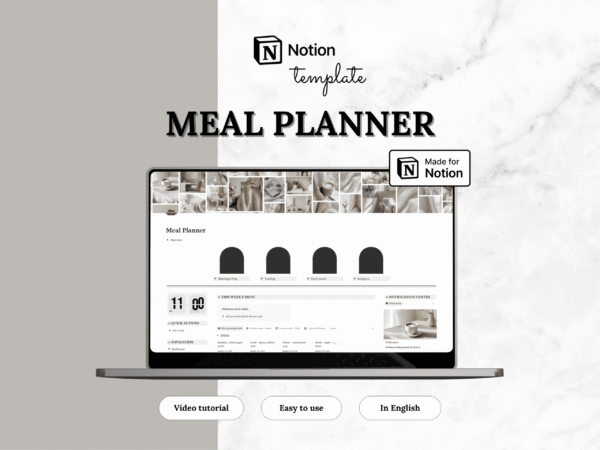
Notion template — Meal planner
Original price was: 12.00$.6.00$Current price is: 6.00$. -
Sale!
Notion template — Medical planner
Original price was: 10.00$.5.00$Current price is: 5.00$. -
Sale!
Notion template — Personal finance tracker
Original price was: 19.00$.9.50$Current price is: 9.50$.