There are some basic things when it comes to productivity. The essentials. Without them, you're more likely to procrastinate, spin your wheels, and make less progress.
If you want to boost your productivity, start simple, start here.
1. Know Where You're Headed
Would you go somewhere you've never been without checking a GPS to know your destination and how to get there? It's the same with your tasks. Are you going to do tasks without knowing what you actually want to accomplish by doing them? If so, you might be working in a vacuum, or things might just take longer. And that's not what we want.
Start by finding your destination. Where do you want to go? What's your vision for your life? What do you want to accomplish? Then, what goals do you want to set to reach that future vision?
Concretely, that can mean several things:
- a long-term vision (5 years from now, where you want to be, professionally and personally)
- annual goals that stem from that vision
- monthly or quarterly goals that stem from those annual goals
- weekly priorities that stem from all of that
Without this guiding thread, every task becomes an isolated decision, disconnected from where you're going. The result: you're moving, but often in several different directions, which creates the feeling of spinning your wheels even when you're working hard.
It's really important to do this upfront, and not just in your head. A study by Dr. Gail Matthews, a psychology professor at Dominican University of California, found that people who write down their goals are 42% more likely to achieve them than those who just keep them in mind. An unwritten goal often stays just an intention that evaporates in the whirlwind of daily life.
The concrete action here is simple: take 15 minutes this week, open a document or a notebook, and write down, in black and white, where you're headed. You can even redo it every 3 months to adjust course.
2. Build Healthy Life Habits
When I talk about the basics: you want to do things more efficiently in your day? Take the time to move, to eat healthy food that gives you enough energy, to socialize and nurture your relationships, to do what makes you feel good. In short, take care of every area of your life. It's time well invested.
Concretely, healthy habits touch several areas at once:
- sleep: a well-rested body makes better decisions and focuses longer
- nutrition: your mental energy depends directly on what you eat throughout the day
- movement: even 20 to 30 minutes of physical activity a day makes a measurable difference
- social relationships: completely isolating yourself to "perform" often ends up draining your motivation
- active rest: moments that serve no productive purpose but recharge your batteries
It's not just a feeling: according to a study published by Goodwill Management, conducted in 2015 for the French National Olympic and Sports Committee and Medef with support from AG2R La Mondiale, regularly practicing physical activity increases an employee's productivity by 6 to 9%, and a company that actively encourages its employees to move can see its profitability climb by up to 14%. Moving isn't time stolen from your work, it's a direct investment in your ability to do it.
Burying yourself under 18-hour workdays and forgetting everything else has rarely helped anyone. Especially long-term. That kind of pace might work for a week or two, but it almost always ends up costing you in fatigue, mistakes, or outright burnout.
3. Define Your Priorities
You know, we're all human. We can't create a 25th hour, stop time (that would be wild!), or clone ourselves. So we have to make choices. Choices about how we're going to use our time. Define what comes first, what your priorities are that you absolutely want to accomplish in your day, your week, your month, and so on.
A simple way to start: for every task on your list, ask yourself "Does this bring me closer to my vision?" and "What happens if I don't do this this week?" Tasks that answer yes to the first question, and where the consequence is real if you push them off, those are your true priorities. The rest is noise that just makes you feel busy.
Start with those priorities. Make sure your priorities are never the ones getting pushed to tomorrow. It's often the opposite that happens: we tackle the small, easy, quick tasks first, because it gives an immediate sense of progress, and we push off the important but more demanding task. The problem is, that important task is always still there, waiting, and it gets heavier the longer it drags on.
Your priorities should be based on what helps you reach your goals, so your vision, on what allows you to maintain healthy habits, to grow both personally and professionally, and to maintain good physical and mental health. I think you get the idea.
4. Plan With Deadlines
I know it's tempting to just "go with the flow." But ultimately, you need a plan and deadlines. Otherwise, everything can drag on far too long, and time can easily be wasted.
There's a scientific reason behind this. A large-scale meta-analysis led by researcher Peter Gollwitzer and his colleague Paschal Sheeran, covering 94 studies, found that people who turn their intentions into precise plans ("if this situation happens, then I'll do this action") succeed significantly better at reaching their goals than those who simply have the intention, without a concrete plan. In other words, telling yourself "I'll get to it" isn't enough: deciding precisely when, where, and how makes all the difference.
Concretely, that looks like deadlines phrased this way: "If it's Tuesday morning, then I work on my new product description between 9am and 11am" rather than "I'll work on my product this week."
I know (apparently I know a lot of things today), you don't want to put too much pressure on yourself so you don't end up with anxiety, exhaustion, or burnout. You shouldn't. Plan smartly and healthily. Plan your self-care too, not just your deliverables.
Set your own deadlines if no one else is imposing them on you, but make them realistic and achievable. A deadline that's too tight, one you never actually meet, ends up losing all its motivating power. Observe yourself closely, take notes, and you'll eventually get to know your own capacity to plan accordingly. After a few weeks of tracking how long your tasks actually take (not how long you think they take), you'll start to see patterns emerge.
5. Do One Thing at a Time
Earlier I told you to prioritize because you can't invent a 25th hour, well, you can't invent a second head either.
We're built to focus optimally on only one thing at a time. Yes, you can do 4 tasks at once, but I can't guarantee the results.
Multitasking is a false good idea. A landmark study published by the American Psychological Association, conducted by researchers Rubinstein, Meyer, and Evans, measured what actually happens in the brain when switching between two tasks: every switch causes a measurable loss of time, and that loss grows with task complexity. In other words, the more demanding your tasks are (writing a product description vs. answering a simple email, for example), the more multitasking costs you.
And once you're distracted in the middle of a task, getting back to full focus isn't instant. According to researcher Gloria Mark of the University of California, Irvine, it takes an average of 23 minutes and 15 seconds after an interruption to return to the same level of focus you had before, a figure she shared in interviews about her research, including with the Wall Street Journal. And that return isn't direct: people often pass through one or two other tasks before getting back to what they were doing.
Do the math: if you're interrupted 6 times in your day (a notification, a text, a question from a loved one), even just a few seconds each, that can add up to more than 2 hours lost trying to regain your focus. Not 2 hours of distraction itself: 2 hours of cognitive recovery time.
You feel like you're getting more done by juggling multiple tasks, but really, it's one of these:
- you're doing everything sloppily
- it's taking you way longer
- you're just not making progress at all
List your tasks in order of priority and tackle one 100%, then move to the next. Simple as that. Eliminate as many sources of distraction around you as possible, it'll help: close unnecessary tabs, put your phone in another room, turn off notifications during your most demanding work blocks.
Frequently Asked Questions
Where should I start if I feel overwhelmed with my time management?
Start with the first foundation: clearly defining where you're headed. Without a clear goal, even the best organization in the world spins its wheels.
Does multitasking really make me lose time?
Yes. Every switch from one task to another has a measurable cost, confirmed by cognitive psychology research, and that cost increases with task complexity.
Why write down my goals instead of just keeping them in mind?
Because it concretely increases your chances of achieving them: 42% more, according to a psychology study.
Do deadlines just create more stress?
Not if they're realistic and precisely phrased (when, where, how). A well-built deadline gives you structure, without pushing you toward burnout.
By tackling these 5 foundations first, you're well on your way to improving your time management. These are non-negotiables if you REALLY want to optimize your time.
Talk soon!
Templates to help you get more productive
-
Sale!

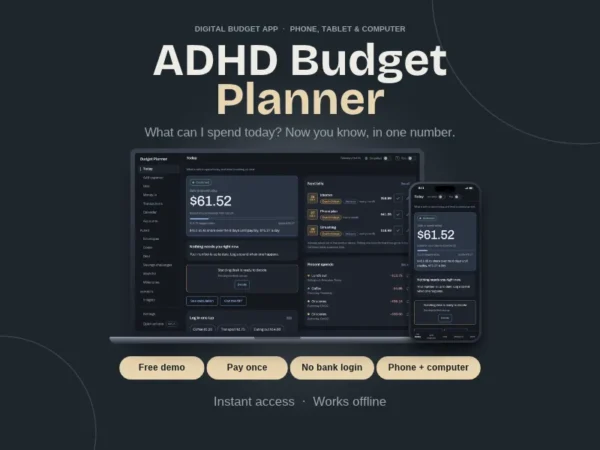
ADHD Budget Planner – App
Original price was: 30.00$.15.00$Current price is: 15.00$. -
Sale!
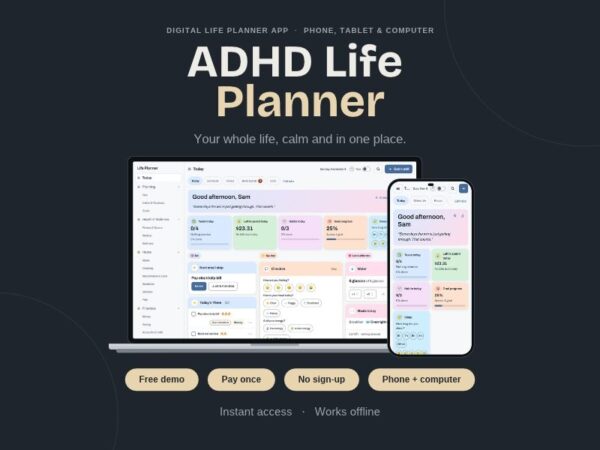
Life planner — App
Original price was: 34.00$.17.00$Current price is: 17.00$. -
Sale!
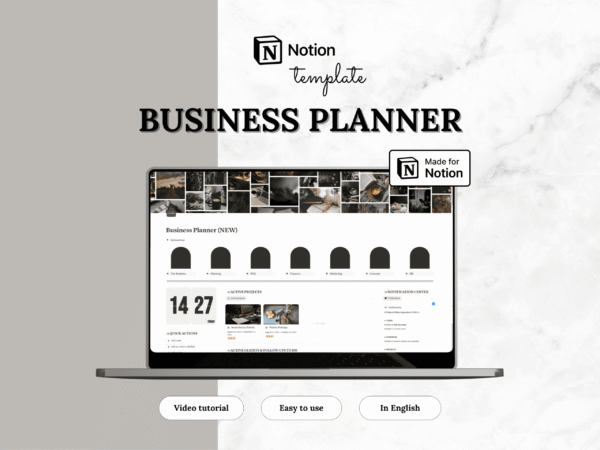
Notion template — Business planner
Original price was: 63.00$.31.50$Current price is: 31.50$. -
Sale!
Notion template — Career planner
Original price was: 16.00$.8.00$Current price is: 8.00$. -
Sale!
Notion template — Event planner
Original price was: 19.00$.9.50$Current price is: 9.50$. -
Sale!
Notion template — Fitness planner
Original price was: 19.00$.9.50$Current price is: 9.50$. -
Sale!
Notion template — GTD planner
Original price was: 20.00$.10.00$Current price is: 10.00$. -
Sale!
Notion template — Home management
Original price was: 19.00$.9.50$Current price is: 9.50$. -
Sale!
Notion template — Language learning
Original price was: 12.00$.6.00$Current price is: 6.00$. -
Sale!
Notion template — Life planner
Original price was: 47.00$.23.50$Current price is: 23.50$. -
Sale!
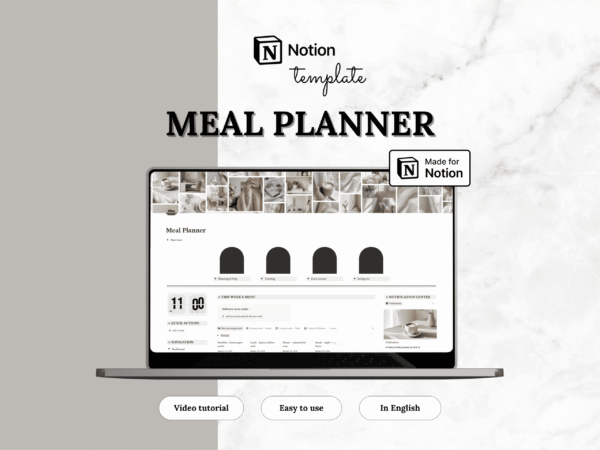
Notion template — Meal planner
Original price was: 12.00$.6.00$Current price is: 6.00$. -
Sale!
Notion template — Medical planner
Original price was: 10.00$.5.00$Current price is: 5.00$.